Extreme Wear Coatings
Tungsten carbide reinforced fluoropolymer systems for the assets that shred ordinary coatings. Doctor blades, slurry handling, mining and minerals, scraper systems, and high abrasion conveyor surfaces.
Why AEGIS extreme wear
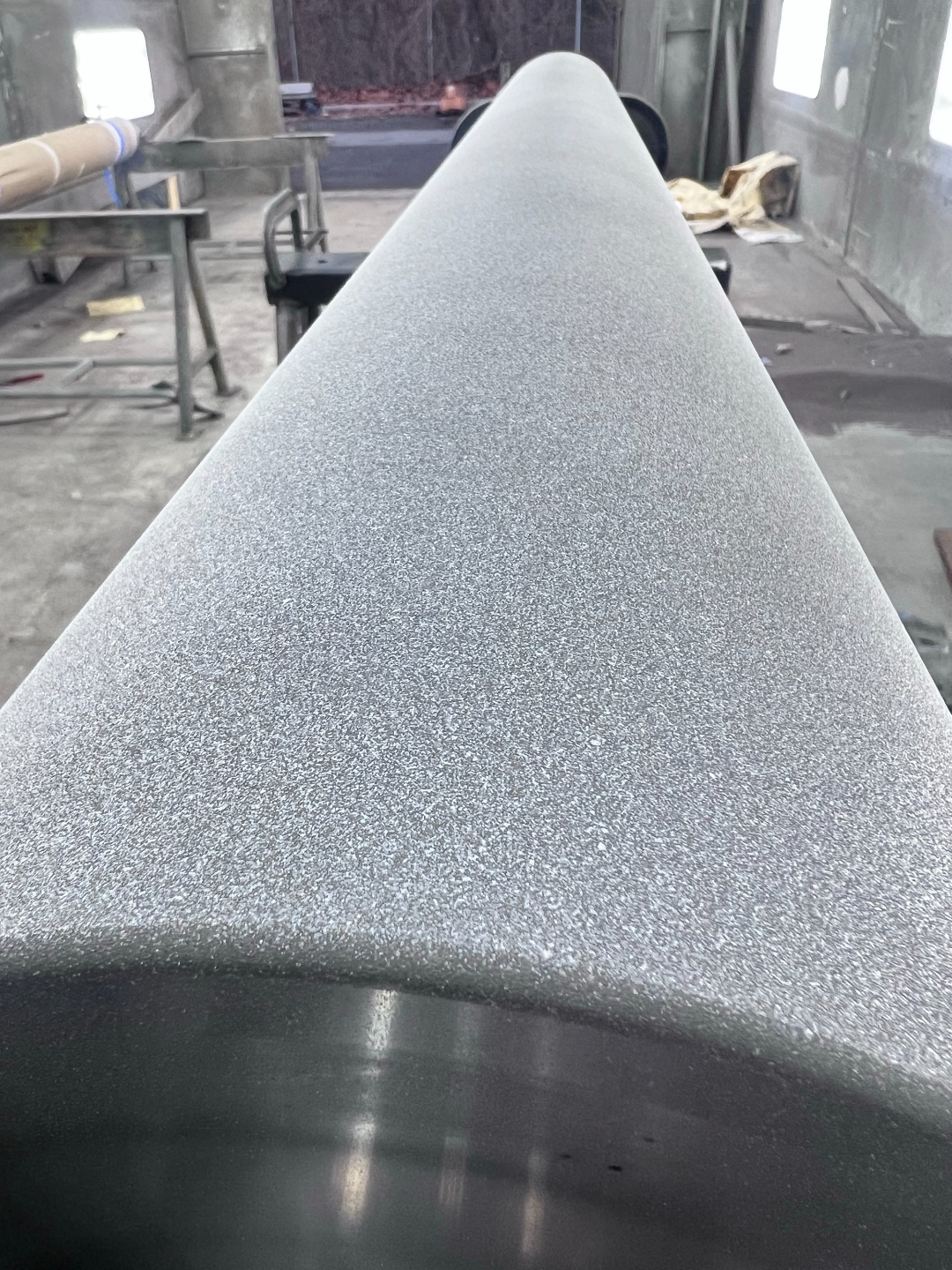
For assets where abrasion is the limiting factor, AEGIS embeds our fluoropolymer system in a tungsten carbide matrix. The result is a single coating that handles chemical attack, release, and aggressive wear in one pass. Service intervals stretch, wear patterns stay predictable, and maintenance windows do not get hijacked by surprise failures.
- EW200. Tungsten carbide reinforced PTFE for doctor blades, scrapers, and high contact pressure release surfaces.
- EW200HD. Heavy duty grade for slurry pumps, impellers, and mining and minerals processing where abrasion is the dominant failure mode.
How the coating works
AEGIS thermal spray applies a tungsten carbide matrix to the substrate, then fluoropolymer is co deposited or impregnated into the matrix. The carbide carries the wear load. The fluoropolymer carries the release and chemical resistance. The bond is mechanical and chemical, set by AEGIS proprietary process heat activation so the coating reaches its rated hardness and adhesion without thermal damage to the base metal.
Typical assets we coat
- Doctor blades on coating, printing, and converting lines where edge wear drives blade change frequency.
- Slurry pumps and impellers handling abrasive solids in mining, minerals, pulp and paper, and chemical service.
- Transport and conveyor rollers in aggregate, mining, and bulk material handling.
- Scraper systems and screw conveyors where abrasion and release must be solved together.
- Hopper and chute liners on bulk handling lines where material flow and wear life both matter.
- Cylinder liners and rotary valves in dry bulk and powder service.
Industries served
- Mining and minerals processing handling abrasive slurries, tailings, and concentrate streams.
- Pulp and paper running doctor blades, slurry handling, and high speed converting tooling.
- Chemical processing with abrasive solids in suspension or aggressive cleaning chemistries.
- Aggregates and bulk material handling with crushers, conveyors, and chute systems.
- Wastewater and biosolids with screw presses, scrapers, and pump systems.
What to send us
To spec the right wear system we need:
- Substrate material and current coating, if any.
- Part geometry: OD, ID, length, blade dimensions, or impeller envelope.
- Service environment: abrasive media, particle size, concentration, and slurry chemistry.
- Operating temperature and contact pressure.
- What is currently failing: wear rate, blade change frequency, or pump rebuild interval.
Buildup. Corrosion. Wear. We stop it.
One engineered platform against the three failure modes that take industrial equipment out of service, with the fastest turnaround in the field. A Spectrum Advanced company.
Buildup and sticking
Extreme release coatings shed adhesive, product, and fouling so rolls, seal bars, and process equipment stop dragging and stay in service.
See the coating →Corrosion
Corrosion prevention coatings protect assets in aggressive chemical and marine service, verified to 4,000-hour salt spray.
See the coating →Wear and abrasion
Extreme wear coatings, including HVOF tungsten carbide, extend the life of parts that erode, gall, or abrade in service.
You are hereFrequently asked
How does AEGIS extreme wear compare to HVOF tungsten carbide?
HVOF carbide is hard but has no release function and is hard to coat in place. AEGIS embeds fluoropolymer in the carbide matrix, adding release and chemical resistance, and the cure runs on our proprietary process heat activation so the system can be deployed onsite when needed.
What hardness can AEGIS extreme wear achieve?
Surface hardness in the 60 to 70 HRC range depending on grade and substrate. We can tune the carbide loading to match the abrasion profile of your service.
Can these coatings be applied in the field?
Yes for many applications. AEGIS proprietary process heat activation lets us cure tungsten carbide reinforced systems on equipment in place. Full system selection depends on geometry and access.
Are AEGIS extreme wear coatings FDA compliant?
Specific grades are. Tell us if you need food contact, pharma, or biosolids handling compliance and we will spec from the appropriate family.
What is the typical service life on a doctor blade?
Service life depends on stock and contact pressure but most coated doctor blades run three to five times longer than uncoated equivalents. We will quote expected life with your spec.
Send us your wear problem
If abrasion is driving blade changes, pump rebuilds, or conveyor wear, AEGIS has the carbide reinforced system for it. One business day engineering response. Three day quote.
Related coating systems
Extreme wear coatings are one part of the AEGIS coating family. For applications where release performance matters as much as wear resistance, see the extreme release coating page. For doctor blades and packaging line bars that combine wear with thermal cycling, see the heat seal bar PTFE coating page. For a complete view of the AEGIS industrial PTFE service portfolio, see the industrial PTFE coating service overview.
Tungsten carbide thermal spray versus commodity HVOF
Commodity HVOF applicators apply a standard tungsten carbide cobalt blend to whatever substrate arrives. The result is a wear surface, but not a tuned one. AEGIS layers tungsten carbide with fluoropolymer impregnation, sets the cure profile per substrate, and verifies hardness and bond strength before sign off. The same coating that resists abrasion also releases process media, which means the asset stops being a wear point and starts running closer to its design throughput. For the engineering comparison see corrosion resistant coatings versus thermal spray.