The short answer: Abrasive media, slurry, and blade contact grind away unprotected steel faster than most maintenance schedules plan for. AEGIS extreme wear systems embed fluoropolymer in a tungsten carbide matrix, so the surface resists abrasion and releases buildup at the same time, with a one business day engineering response and a three day quote.
What actually wears out a doctor blade or slurry pump?
Three things, usually working together. Hard particles in the process stream act like sandpaper. Constant contact pressure, like a doctor blade loaded against a roll, concentrates that abrasion on one narrow edge. And buildup that sticks to the surface traps more abrasive material in place, so the wear rate climbs the longer the part runs.
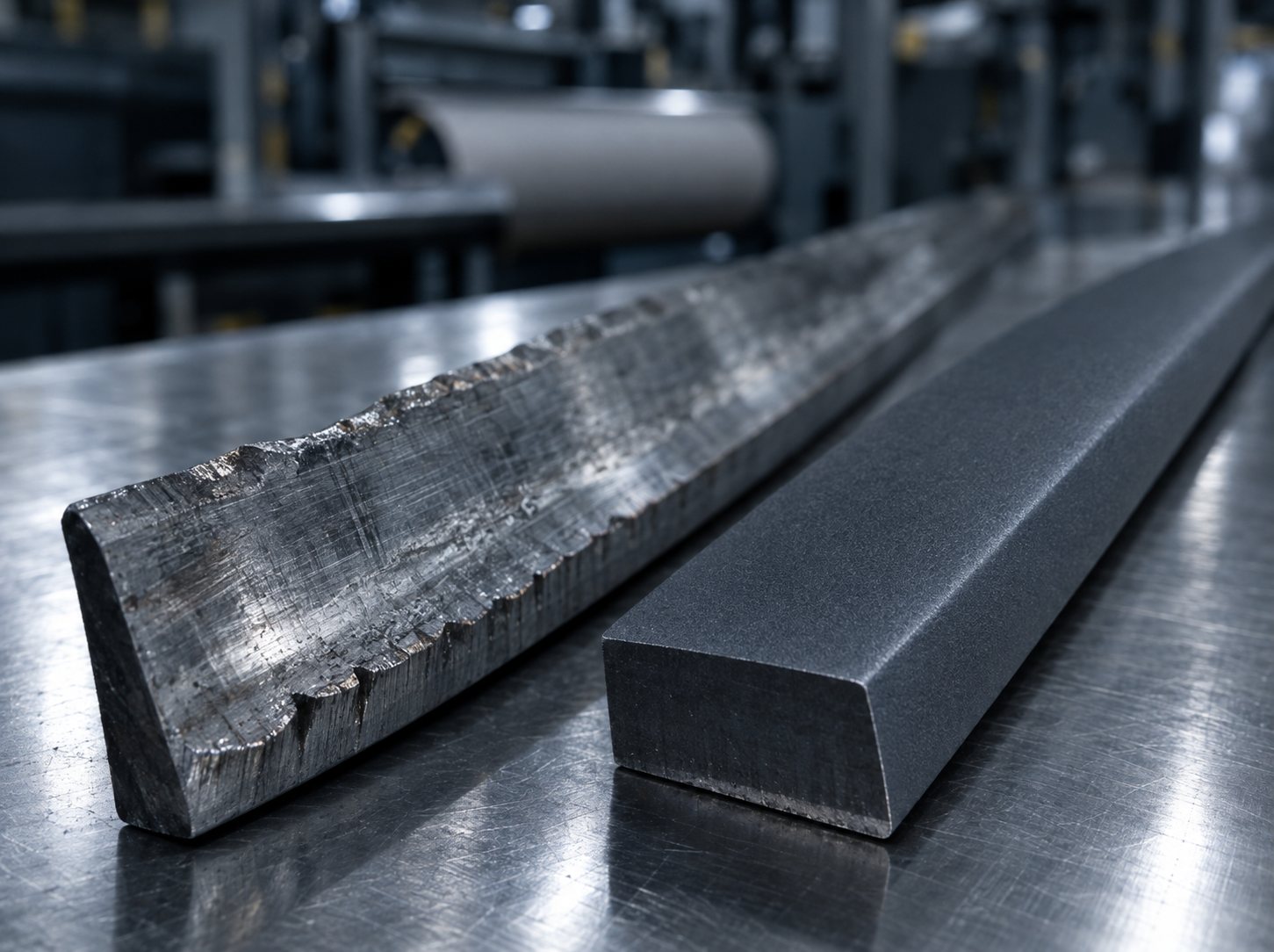
The result is familiar to any maintenance team: scalloped blade edges, grooved transport rollers, thinning pump casings, and a parts budget that never seems to shrink.
Why does hard chrome or a commodity HVOF coat fall short?
Hardness alone only solves half the problem. A hard surface that still lets product stick keeps collecting abrasive buildup, and the wear simply moves to the edges of the deposit. Commodity coatings also tend to be specified once and applied the same way to every part, without matching the system to the substrate, the wear mode, and the process media. For a deeper comparison, see thermal spray vs HVOF vs ceramic coatings.
What does a tungsten carbide plus fluoropolymer surface change?
It attacks both causes at once. The tungsten carbide matrix carries the abrasion load. The fluoropolymer in that matrix lowers friction and releases process media, so buildup has nothing to hold onto. The part stops being a wear point and starts running closer to its design throughput between service intervals.
Which parts are worth coating first?
- Doctor blades and scrapers that are replaced on a fixed schedule.
- Transport rollers that groove or lose surface finish.
- Slurry pumps and handling equipment in mining, minerals, and pulp lines.
- Conveyor and chute surfaces that wear through and carry buildup.
Start with the part that is changed most often or causes the most unplanned downtime. That is where the return shows up first.
How fast can AEGIS turn a wear part around?
Send the part details, the wear mode, and the process media. AEGIS engineering responds within one business day and quotes within three days. Parts are coated in our Elkton, MD shop, or on site with our field deployable coatings when the asset cannot ship. Every job is custom quoted.
When does Cerakote make more sense?
When wear comes with heat and corrosion, a thin film ceramic can be the better fit. AEGIS is a factory-trained, certified Cerakote applicator for industrial and aerospace components. See Cerakote coatings, or read about corrosion prevention if chemical attack is the bigger problem.
Send us your wear problem
Tell us what is wearing out, how often, and what it costs you. We will tell you whether an extreme wear coating pays for itself. AEGIS Advanced, a Spectrum Advanced company.