How XR release coatings work
Why does an XR roll stay clean when PTFE doesn’t? AEGIS Advanced builds XR coatings in three layers: a clean blasted surface, a hard tungsten carbide matrix, and our extreme release topcoat locked into that matrix. The carbide takes the wear. The release coat sits in the valleys between the carbide peaks, so a doctor blade can’t scrape it away. In our tape testing, XR released over 40 times better than the best PTFE heat shrink sleeve, even after heavy wear.
Send us the roll Extreme release coatings
Three layers, three jobs
1Grit blast
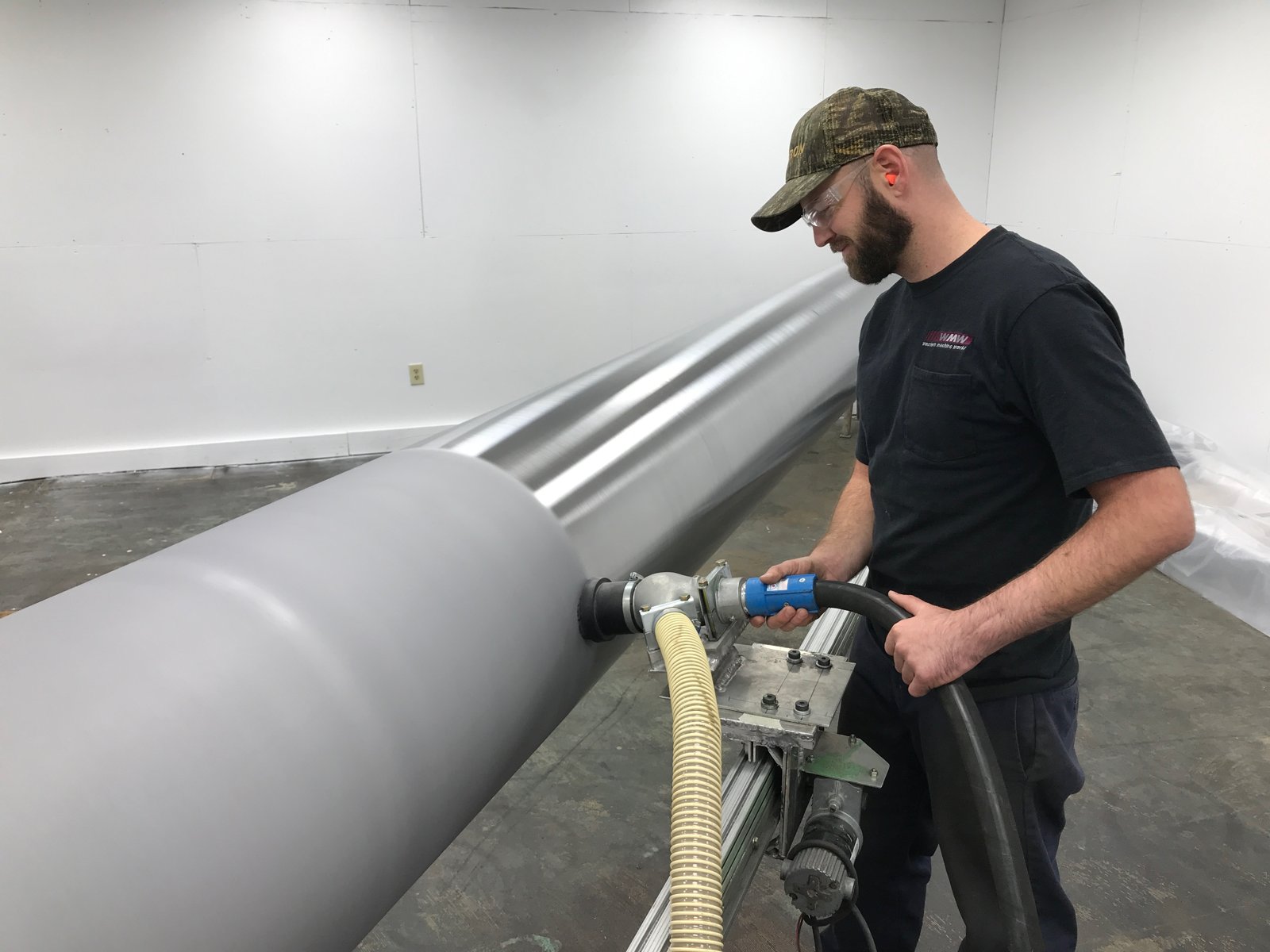
We vacuum grit blast the roll face down to clean metal. That removes old coating, corrosion and buildup and gives the next layer something to grip.
2Tungsten carbide matrix
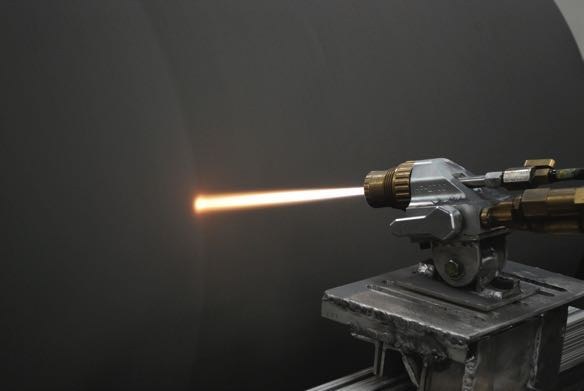
We spray about 80 microns of tungsten carbide with HVOF (high velocity oxygen fuel). It lands as a hard, textured surface of peaks and valleys, around 600 HV.
3XR release topcoat
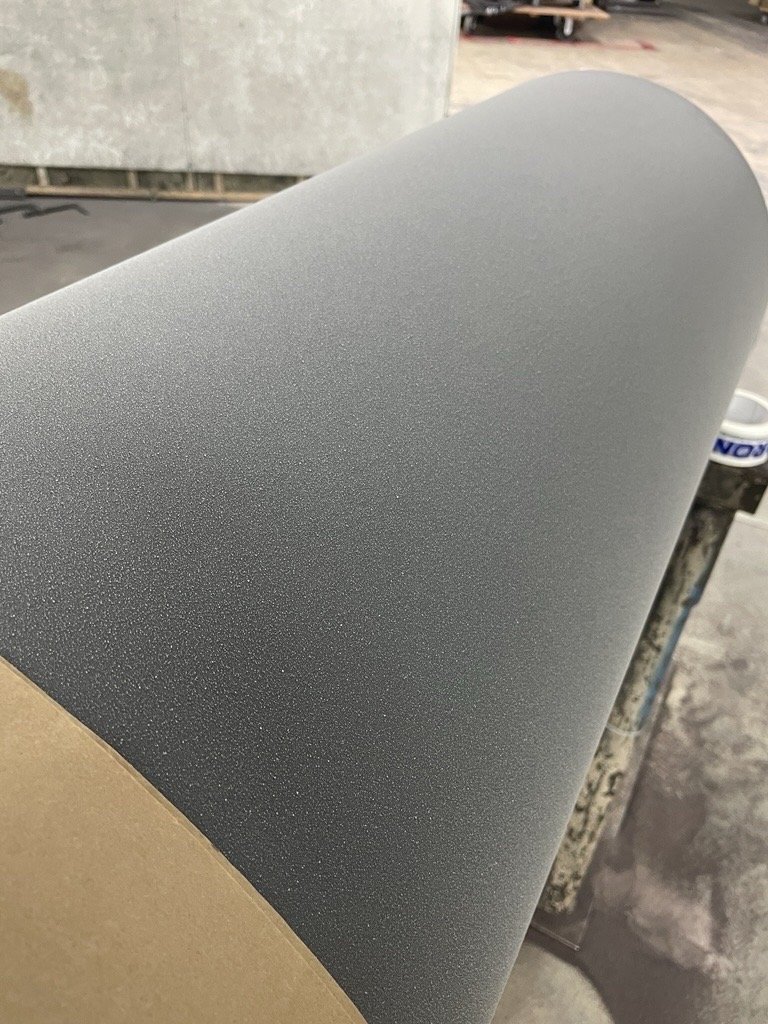
We apply our extreme release topcoat into the carbide. It cures at room temperature, so there’s no oven and no long cure window.
Why the release lasts
A plain release coating is soft. On a doctored dryer or a felt roll it wears off, and once it’s gone the roll starts picking up stickies again. In an XR coating the carbide peaks carry the blade and the abrasion. The release coat is protected down in the valleys, so the surface keeps releasing long after a standalone coating would be gone. You get the wear life of carbide and the release of a non-stick coating in one surface.
How we tested it
We built XR to beat recycled-fiber stickies, so we tested it the way stickies attack a roll:
- Wear first. Coated coupons went into a rotating wear tester with a steel blade pressed against the surface at 300 lb/in² for 4,000 cycles, to simulate aggressive doctoring.
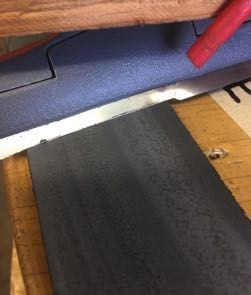
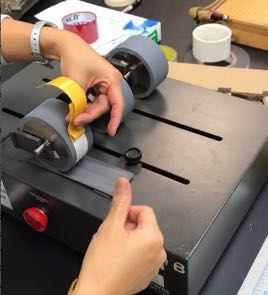
- Then stick it. We applied TESA 7475 test tape to worn and unworn coupons and held them at 160°F for 24 hours.
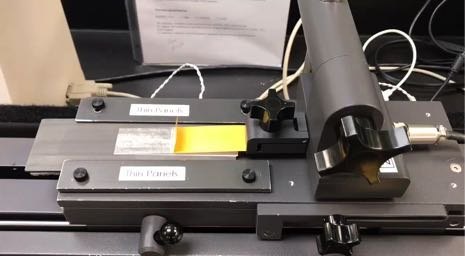
- Then pull it. A ChemInstruments AR-1000 adhesion release tester measured the force needed to peel the tape off.
Force to peel TESA 7475 tape (lower is better)
The XR family
| Coating | What it is | Where it fits |
|---|---|---|
| XR100T | Tungsten carbide + XR release topcoat | Standard release for felt rolls, paper carrying rolls and doctored dryers in recycled grades |
| XR100TC | Coarser carbide + XR release | Traction and release for winder drums and traction rolls |
| XR200 | Spray-on XR release, no carbide | Hoppers, ductwork, pans, nozzles and large parts that don’t see a blade |
| Food grade | XR or PTFE-based topcoats over carbide | Food processing rolls and equipment |
Food contact
The XR release topcoat was tested by SGS Polymer Solutions in 2018 and met the 21 CFR 177.2600 extractables limits in water and n-hexane for food-contact articles. See food-grade release coatings.
Common questions
What is the maximum temperature for XR?
XR release topcoats are rated to about 400°F. For hotter service we use a PTFE-based topcoat over the same carbide matrix, rated to about 700°F.
Can XR be doctored?
Yes. That’s what the carbide matrix is for. The blade rides on the carbide peaks and the release coat stays in the valleys.
Can you coat on site?
We can do any size roll in our Elkton facility, and we apply HVOF and release coatings on site when pulling the roll doesn’t make sense.
Can I test it first?
Yes. Ask for a free XR sample coupon and try it against your own stickies.