Diffuser Coating Service
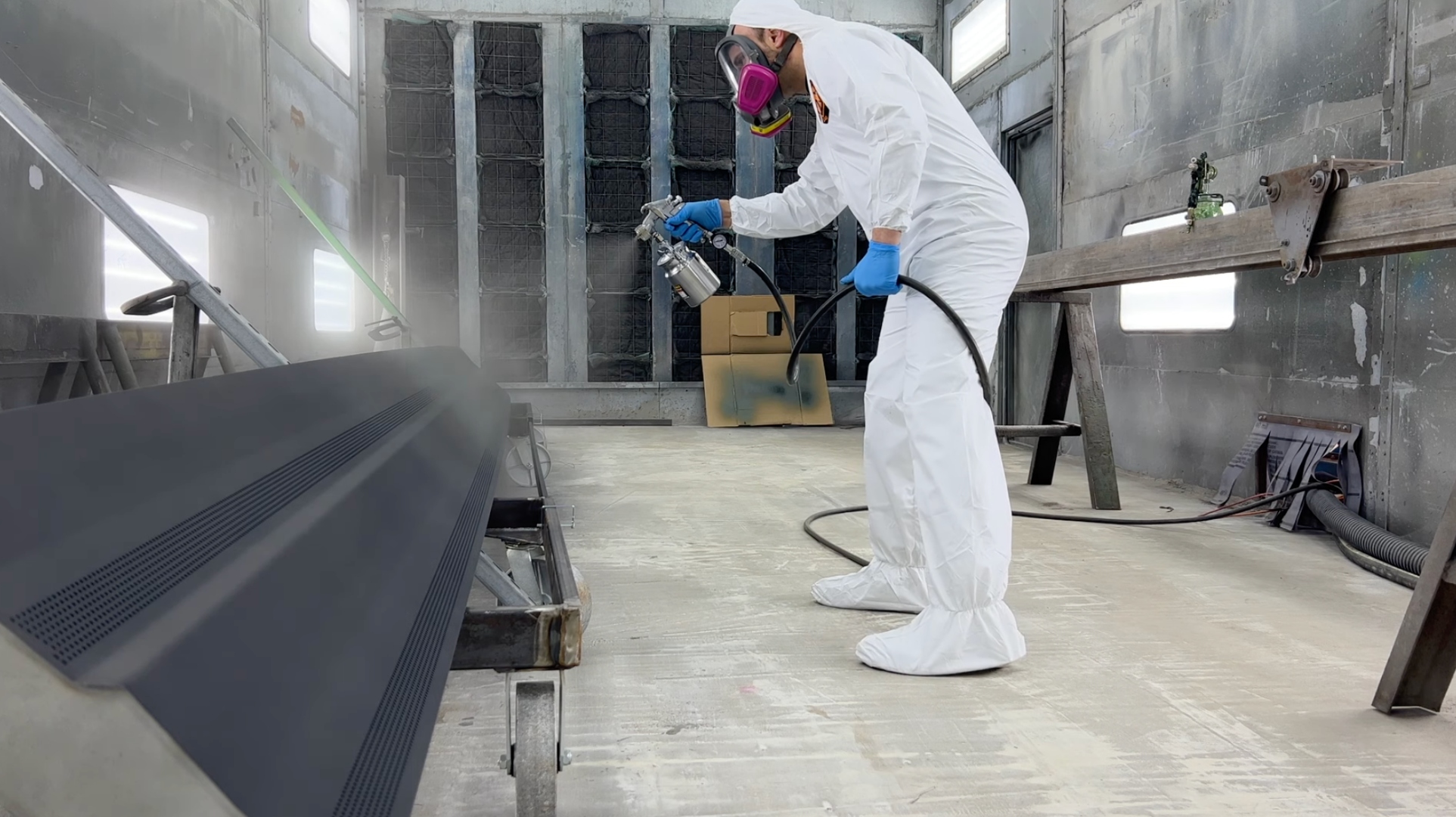
If your diffusers are fighting buildup, fouling, or premature failure, this is what we do all day. AEGIS Advanced coats industrial diffusers, steam boxes, and other long process equipment with engineered fluoropolymer systems. We cure the full part in a single piece in our 30 foot industrial oven in Elkton, Maryland. No infrared substitutes, no sectional cures, no shortcuts. A Spectrum Advanced company.
The hidden cost of diffuser buildup
Diffusers are the quiet workhorses in a paper mill, a pulp washing operation, a food plant, or any chemical line that needs even flow. Most plants do not think about them until they start choking. Then they think about them constantly.
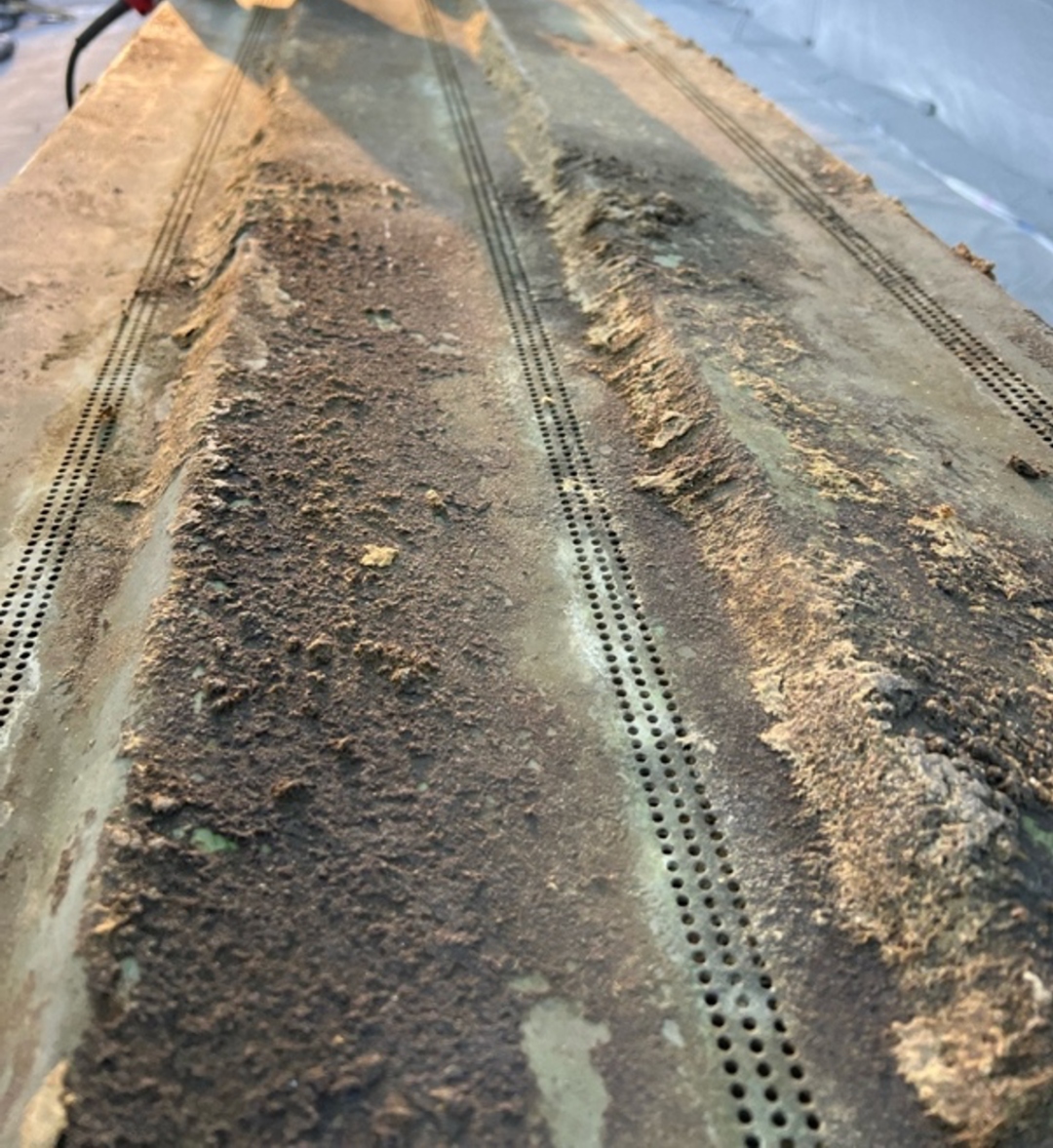
Here is what your team usually sees first. Steam or air holes start to close. The system strains against the restriction, fans and blowers work harder, and the energy bill creeps up. Flow goes uneven, and the product on the other end shows it. In a paper mill that means web cockling, wrinkles, and waves. In a food plant it means inconsistent moisture or temperature. In a chemical line it means uneven stripping or aeration. Your maintenance crew gets locked into a cycle of cleaning, restarting, fighting the same buildup again three weeks later, and watching the diffuser slowly lose service life.
The diffuser starts pristine, residue builds up, and your operation pays a recurring tax in downtime, energy, and quality losses until the surface gets cleaned or replaced. That tax adds up fast.
Why diffusers foul so quickly
Honestly, diffusers live in the worst environment a coating can be asked to handle. Steam, sticky pulp slurries, aggressive chemistries, adhesive carryover, food byproducts, mineral scale, corrosive vapors. All of it at once. Uncoated steel does not stand a chance. Residues bond, they harden, and what should be a routine wipedown turns into a multi hour cleaning job your operation cannot afford to repeat every shift.
The metal substrate is doing its best. The coating is what actually does the work of keeping the surface clean between cleanings.
Before and after
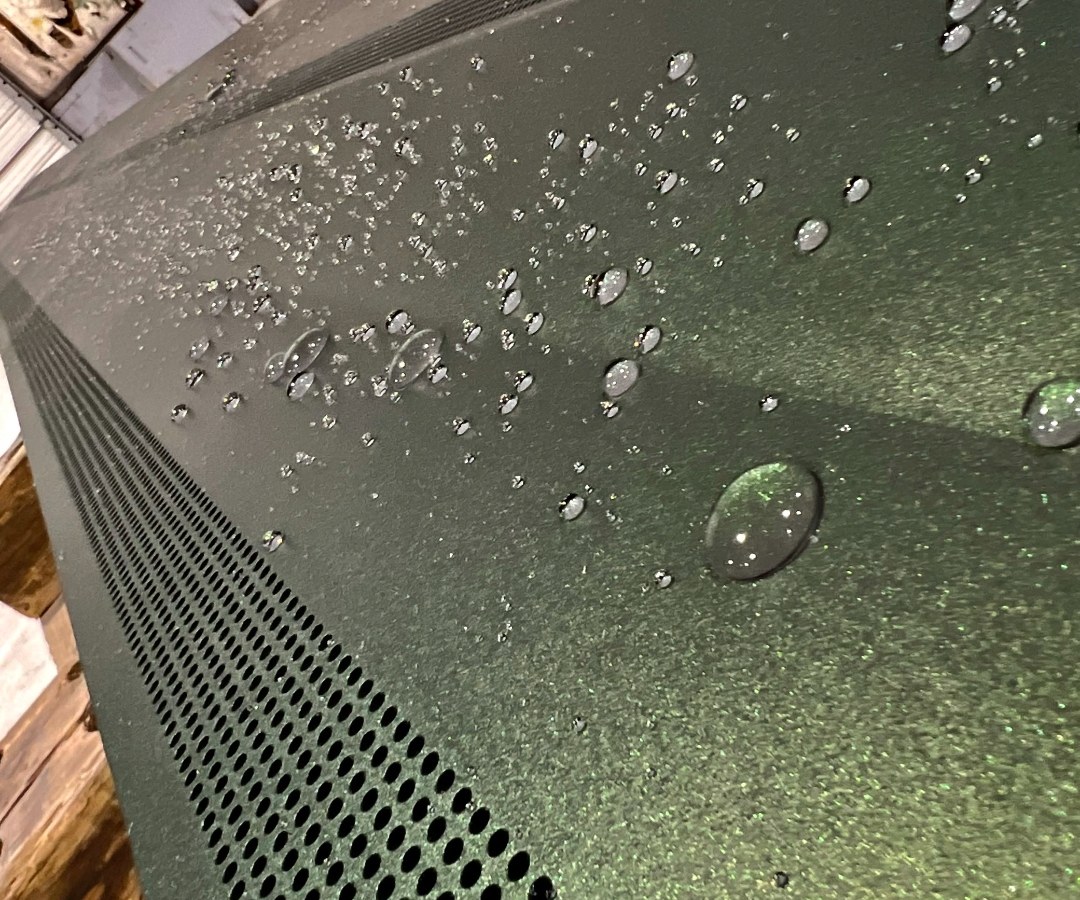
This is the difference. Same kind of diffuser, same operating environment. One has been running uncoated for months. The other has an AEGIS fluoropolymer system on it.
How AEGIS fluoropolymer coating changes the equation
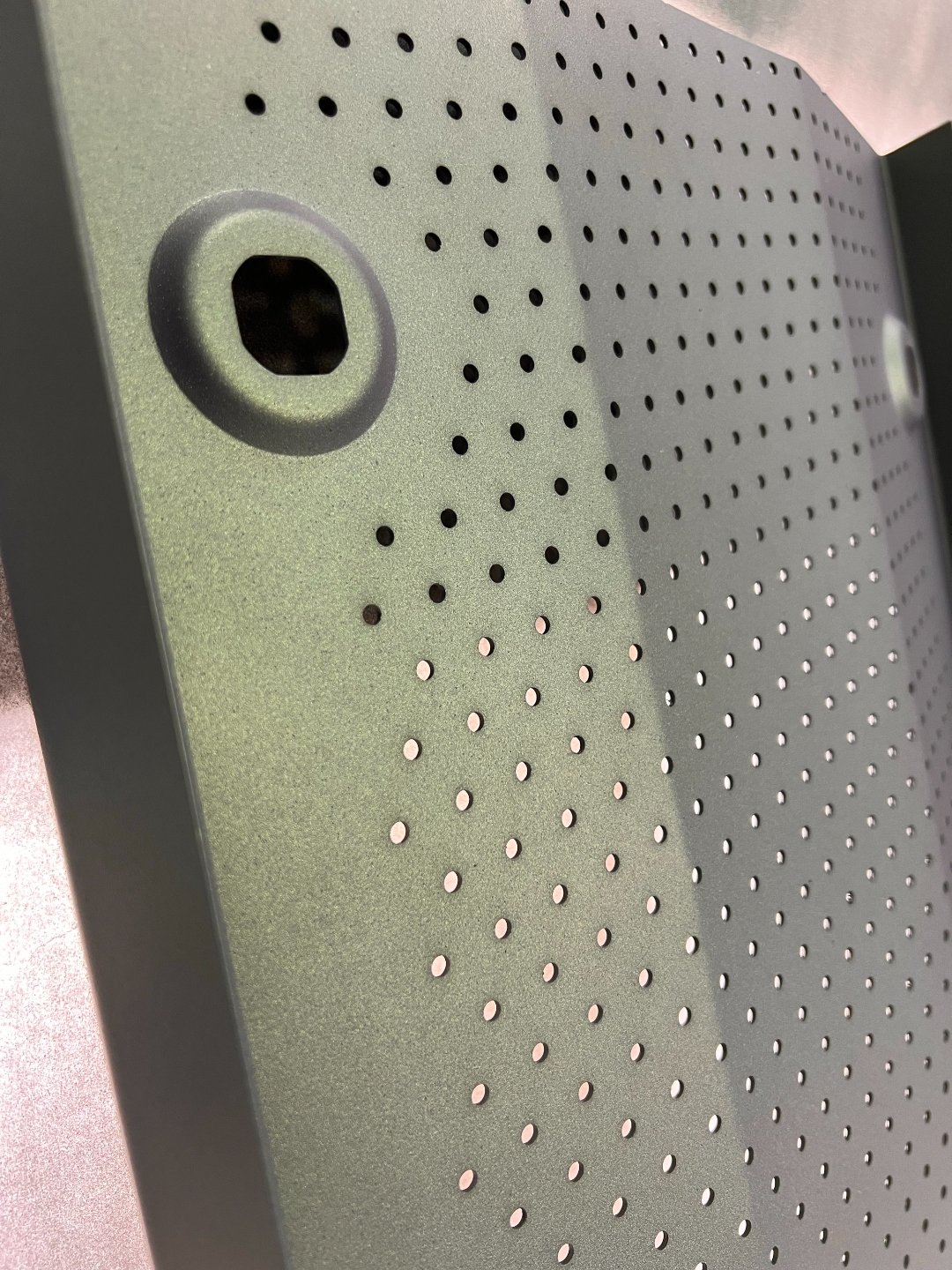
We apply engineered fluoropolymer coatings to the diffuser surface. Think of it as the same nonstick chemistry behind premium cookware, but reformulated and scaled up for industrial duty. The coating creates a near frictionless barrier. It resists adhesion of the sticky stuff, dramatically slows buildup, and protects the underlying metal from corrosion at the same time.
On a typical paper mill diffuser, here is what changes once the coating is on:
- Air, steam, or chemical flow stays uniform across the full diffuser length
- Cleaning intervals stretch from weeks to months
- Product quality stabilizes batch to batch
- Web cockling and uneven drying complaints drop measurably in papermaking
- Energy load on fans and blowers drops because the system stops fighting restricted flow
- Equipment service life extends because the metal underneath is no longer under corrosion attack
Why most coating shops cannot do this
Fluoropolymer chemistry does not forgive shortcuts. To reach full performance, the coating has to cure at 700 degrees Fahrenheit across the entire substrate. Not most of it. All of it. The metal has to come up to temperature uniformly, and the coating has to hold at that temperature long enough to fuse and bond.
Most industrial coating shops do not have an oven big enough to cure a full length diffuser in one piece. So they improvise. Some substitute infrared heaters on the outside of the part. Others pass the diffuser through a smaller oven in sections. Both approaches risk the same failure: the coating surface reaches cure temperature before the underlying metal does. The result looks fine on day one, then starts delaminating in service a few months in.
Most of the customers calling us have already lived through that failure cycle once. They are not asking who can quote the cheapest job. They are asking who can do it right the first time.
The 30 foot oven that makes it possible
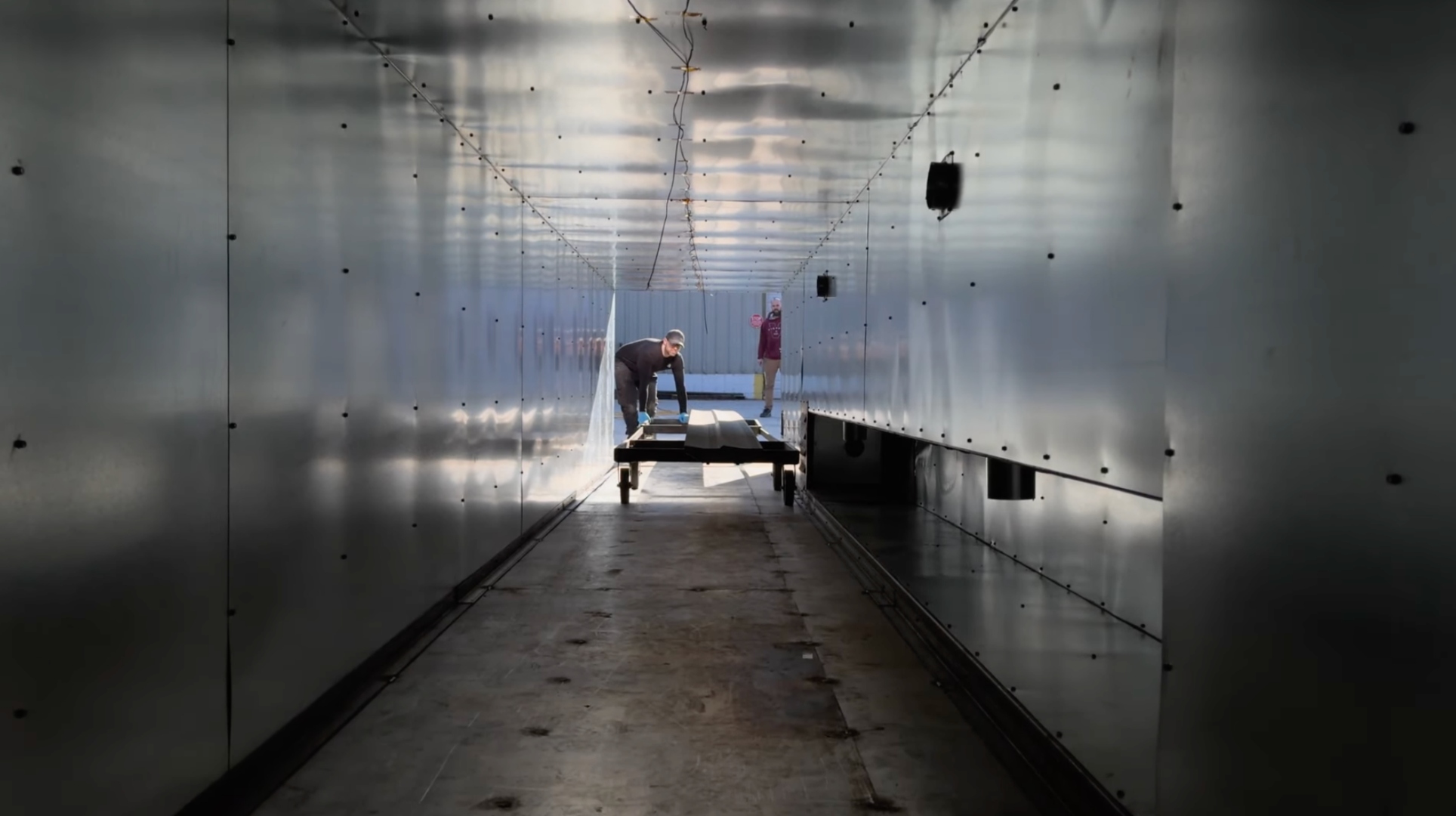
We built our process around a 30 foot industrial oven, one of the few of its kind in North America purpose built for curing large process equipment. It is designed around exactly this class of part: full length diffusers, steam boxes, and long welded fabrications that cannot tolerate sectional cure or infrared substitution.
What that gets your job:
- Single piece cure for full length diffusers up to 30 feet
- Uniform high temperature cure across the entire substrate, with no field IR patching
- The right fluoropolymer system for your chemistry and operating profile (we help pick it)
- Surface preparation calibrated to your substrate metallurgy
- Documented cure cycle on every job, temperature traces included
- Workshop turnaround in Elkton, Maryland for parts that ship
Industries we coat diffusers for
Diffusers show up in more places than most engineers realize. Anywhere air, steam, or chemicals need to spread evenly, and especially where stickiness, fouling, or corrosion is part of the daily operating environment, a coated diffuser pays for itself fast.
- Corrugated and containerboard mills. The original use case that pulled us into this work, and still the biggest segment we serve.
- Tissue, board, and specialty paper. Same physics, different chemistry profile. Pulp fines, sizing agents, and wet end additives all stick to bare metal.
- Pulp bleaching and washing towers. Aggressive chemistry, high temperature, mineral fines. Tough on metal, easy on a properly cured fluoropolymer.
- Chemical process gas spargers and air strippers. Stripping volatile organics from process water without fouling the sparger.
- Fluid beds and dryers in food production. Sticky food residues, sugar deposits, starch byproducts.
- Water and wastewater aeration systems. Biofilm and mineral scale slowly choking the diffusion rate.
- Textile, nonwoven, and flocking lines. Adhesive carryover, fiber accumulation, finish chemistry.
How the workflow actually runs
- 1. Spec review. Tell us the diffuser length, width, material, the process chemistry it sees, operating temperature, and the failure mode you are trying to solve. Engineering responds with a recommended coating system and a quote, usually within one business day.
- 2. Ship to Elkton. Standard shippable diffusers come to our Maryland workshop. We coordinate the freight if you want us to.
- 3. Surface preparation. The diffuser is cleaned, profiled, and prepped to the coating manufacturer specification for the system we picked.
- 4. Coating application. The fluoropolymer is applied to the specified film thickness, with the application method matched to the part geometry.
- 5. Full length cure in the 30 foot oven. Diffuser cures at 700 degrees Fahrenheit across its full length in a single oven cycle. Temperature is logged the whole way.
- 6. QC and ship back. We check coating thickness, adhesion, and appearance before the diffuser gets packaged and shipped back to your facility.
Typical turnaround on a standard diffuser is 2 to 3 weeks from receipt. Larger or higher complexity parts can extend that. If your production schedule cannot wait, ask about expedite when you send the spec and we will tell you what is realistic.
Common questions
How long does an AEGIS coated diffuser last in service?
It depends on the chemistry, temperature, abrasion, and how the diffuser gets cleaned. Most paper mill diffusers run 18 to 36 months between recoats. Aggressive chemical service or high abrasion environments may shorten that window. We log every job, so when you are due for a recoat we are specifying against your actual operating history, not a guess.
What is the maximum diffuser length you can coat?
30 feet in a single piece. Longer diffusers can be coated in two sections if the joint geometry allows, though most operations prefer single piece cure for the integrity it delivers.
Which fluoropolymer system is right for my diffuser?
PTFE, PFA, and FEP are the three workhorse families for diffuser coating. PTFE gives you the highest temperature tolerance and best release. PFA handles aggressive chemistry well and tolerates calender style operating temperatures. FEP is the workhorse for moderate temperature, general fouling resistance. You do not need to figure out which one to use. Send us the operating conditions and engineering picks the right match.
Can you coat a diffuser that cannot be removed from service?
For most diffusers, shipping the part to our Elkton workshop is the right call. A controlled oven cure delivers better performance than any field application. We do have field deployable capability for assets that genuinely cannot be moved, but it is a different process with different performance characteristics. If you are not sure which path fits, talk to engineering about your specific situation.
Is the coating food contact compliant?
Yes. The fluoropolymer formulations we use for food and beverage diffusers meet FDA 21 CFR 175.300 and 177.1550 for indirect food contact. We provide compliance documentation on request.
How is pricing structured?
Every diffuser job is custom quoted because length, diameter, substrate, chemistry, and cycle requirements all drive the spec. Send us the basics and engineering responds with a quote, usually within one business day.
Talk to engineering about your diffuser
If your operation is fighting diffuser buildup, fouling, or premature failure, the conversation starts with a few basics. Length, width, material, the chemistry and temperature the diffuser sees, and what you are trying to fix. Engineering responds with a recommended coating system and a quote, usually within one business day.
Deeper reads
- How much is your diffuser buildup costing you? The real price of unplanned cleandowns
- Beyond maintenance management: How coated diffusers eliminate the buildup problem entirely
- AEGIS coating systems overview for the full family of PTFE, PFA, FEP, HVOF, and ceramic systems
- Industrial coating applications across paper, food, chemical, marine, and structural assets