Conductive PTFE Coatings
Carbon reinforced PTFE for static dissipation on flexible packaging, converting, and solvent process surfaces. Low friction, high release, with controlled surface resistivity engineered for your line.
Why AEGIS conductive PTFE
Static buildup on insulating film surfaces causes web tracking problems, sparking risks in solvent rich environments, and contamination from attracted particulates. Conductive PTFE addresses the root cause by giving the contact surface controlled electrical conductivity while keeping the release and low friction of a fluoropolymer surface.
- CD500. Carbon reinforced PTFE for static dissipation on rollers, slides, and contact surfaces.
- CD500EX. Higher carbon loading for explosion proof and solvent rich environments where static control is safety critical.
How the coating works
Carbon black or carbon fiber is dispersed into the PTFE matrix at a loading that targets a specific surface resistivity, typically 10^4 to 10^8 ohms per square. The coating is applied over proprietary surface preparation and cured by proprietary process heat activation. The result is a continuous conductive path from the contact surface to a grounded substrate, so static charge dissipates instead of accumulating on the web.
Typical assets we coat
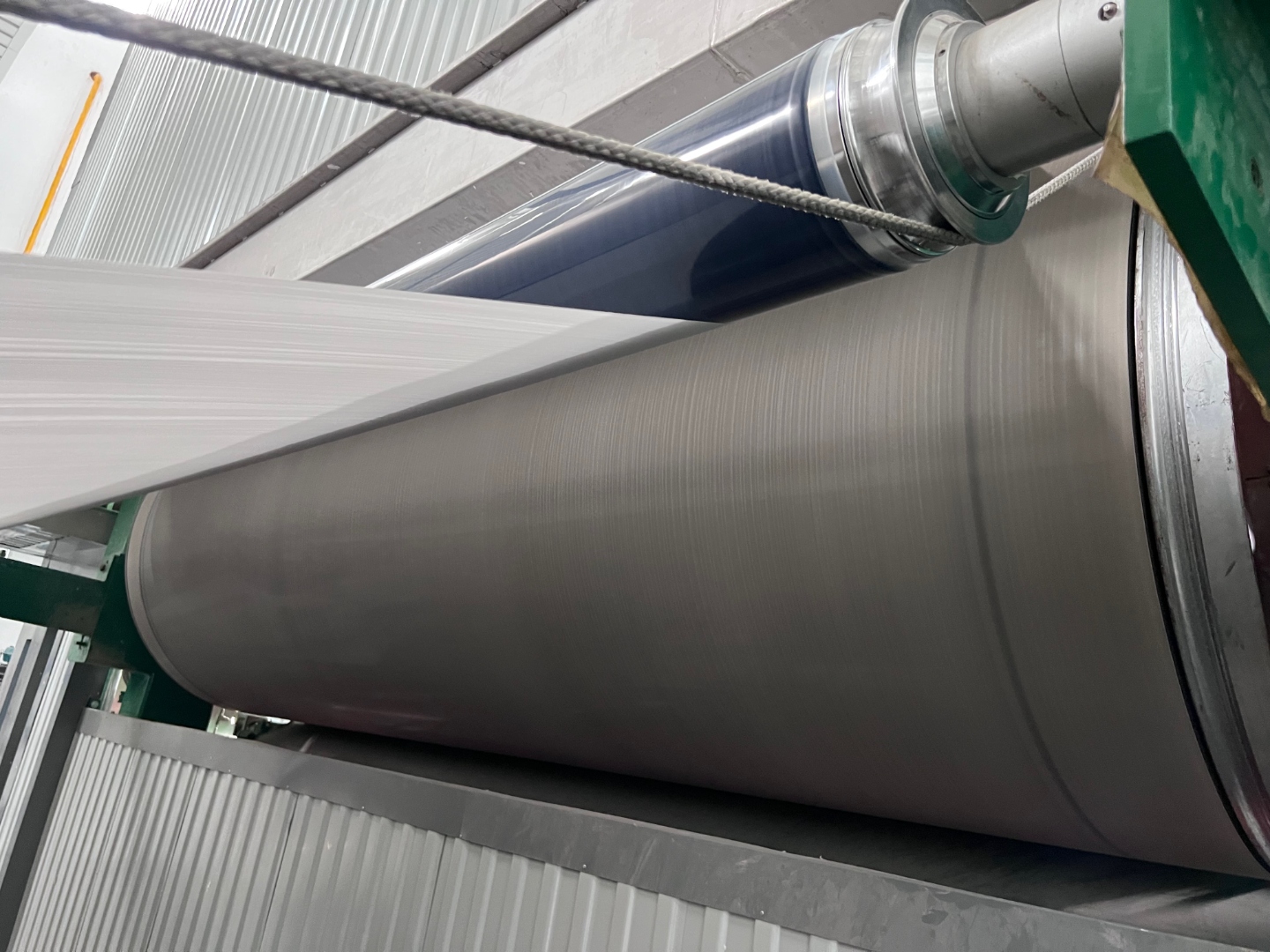
- Idler and dancer rollers on film, foil, and laminating lines where static drives web tracking and contamination.
- Conveyor surfaces and slide plates in solvent rich environments where static is a safety risk.
- Mandrels and forming surfaces on vertical and horizontal wrapping equipment.
- Sealing bar and platen faces where static control and release must be solved together.
- Process rollers in printing, coating, and converting where consistent charge dissipation is required.
Industries served
- Flexible packaging and converting with film and foil substrates that hold static charge.
- Pharmaceutical and medical device packaging where contamination from attracted particulates is a quality risk.
- Solvent based coating and printing where static dissipation is a safety requirement.
- Specialty film manufacturing with high speed web handling.
- Battery and electronics assembly where ESD control on contact surfaces matters.
What to send us
To spec the right conductive system we need:
- Substrate material and surface condition.
- Geometry: OD, ID, length, or face dimensions.
- Target surface resistivity or ESD specification you must meet.
- Service environment: solvent type, web material, temperature, and humidity.
- What is currently failing: tracking, contamination, sparking, or product reject due to static.
AEGIS conductive systems: CD500 and CD500EX
AEGIS runs two conductive fluoropolymer families, both bonded with our patent-pending proprietary cure process. We quote a target resistivity against your specification rather than a fixed number, because the right range depends on what you are trying to prevent.
- CD500, targeting 106 to 108 ohms per square, for general static-dissipative service.
- CD500EX, targeting 104 to 106 ohms per square, for solvent-rich and explosion-proof applications that need a more aggressive dissipation range.
How the coating grounds
The conductive coating forms a continuous conductive path through the film to the substrate, which is the standard grounding path. Where an installation requires it, we can specify a discrete ground tab. Either way, grounding continuity is verified before the part ships. Continuous service holds to 500 degrees Fahrenheit; the carbon loading is stable across the full PTFE service range. Where the application involves food, pharmaceutical, or medical device contact, we specify from an FDA-compliant family and provide documentation.
Large components and wide-area static
Conductive coatings matter most where charge accumulates over a wide area: tank and vessel lids, large chutes, mixing covers, and similar components, often in aluminum. On a large metal lid, an insulating coating lets static build until it discharges, which is both a safety and a process risk. A static-dissipative coating carries that charge to ground continuously across the whole surface while still delivering release and corrosion protection. Send us the substrate, the dimensions, the operating environment, and the target resistivity, and engineering returns a quote, usually within one business day.
Frequently asked
What surface resistivity can AEGIS achieve?
CD500 targets 10^6 to 10^8 ohms per square. CD500EX runs 10^4 to 10^6 ohms per square for solvent rich and explosion proof service. We will quote a target value with your spec.
Does adding carbon affect release performance?
Slightly. Conductive PTFE has a marginally higher coefficient of friction and slightly reduced release versus pure PTFE, but stays well within the range required for most converting and packaging applications.
Are conductive PTFE coatings FDA compliant?
Yes on the systems where it applies. Tell us if you need food, pharma, or medical device contact compliance and we will spec from the appropriate family.
Can the coating be grounded through the substrate?
Yes. The coating forms a continuous conductive path to the substrate, which is the standard grounding path. We can also spec a discrete ground tab if your installation requires one.
What service temperatures can these coatings handle?
Continuous service to 500°F. The carbon loading is stable across the full PTFE service range. Tell us your peak and continuous operating temperatures and we will spec accordingly.
Send us your static problem
If static is driving web tracking, contamination, or safety concerns on your line, AEGIS has the conductive system for it. One business day engineering response. Three day quote.