Beyond Maintenance Management: How Coated Diffusers Eliminate the Buildup Problem Entirely
Executive Summary
Walk into any corrugated mill and you can feel the heartbeat of the operation running through the steam boxes and diffusers that line the machine. These components rarely get attention from the front office, but they quietly determine whether every sheet bonds the way it should.
Behind the scenes, though, there is a constant fight to keep those diffusers clean. The same pattern plays out over and over again: they run, they plug, the team shuts down and cleans, then the cycle starts again.
It does not have to work that way. Coated diffusers change the game by shifting your operation away from managing buildup and toward eliminating the buildup problem altogether.
The Hidden Cost of Buildup: Why Traditional Maintenance Falls Short
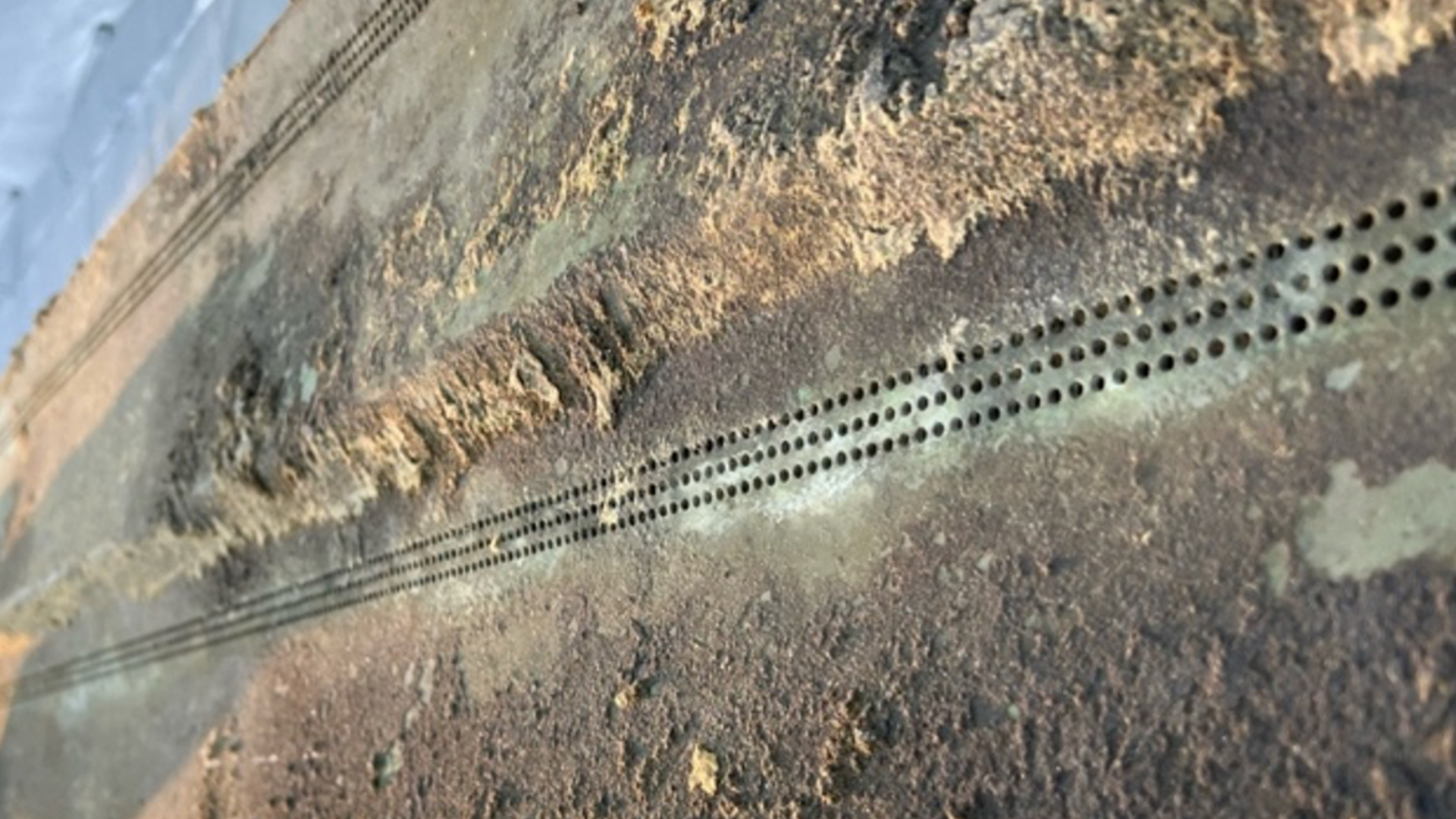
Picture a typical week in the middle of a production run. The diffuser that went in clean is now covered with sticky fiber and debris. Steam holes that are supposed to stay open and consistent are starting to narrow. At that point your team has a decision to make.
What often gets missed is that the real cost goes beyond the hassle of planning the next cleaning window.
When diffusers plug with fiber and residue, several things are guaranteed to follow:
Blocked diffusers mean uneven steam flow. Once the holes start to close off, moisture distribution across the sheet becomes irregular. Instead of a stable, repeatable moisture profile, you get variation that shows up as quality problems downstream.
Energy usage creeps up while the system tries to push steam through restricted passages. The steam supply has to work harder to maintain the same output. You may not see obvious alarms, but you will see it in your utility bill.
Your maintenance supervisor and machine crew end up trapped in a permanent cleanup cycle. Their calendar fills with diffuser checks and emergency wash ups. The team is not fixing the root problem. They are treating symptoms so the equipment can limp along.
Over time, those deposits harden until what should be a straightforward cleaning job turns into a long, difficult task. Conventional cleaning methods can only restore so much performance because they never address why buildup is sticking so aggressively in the first place.
Why Diffusers Get So Dirty: The Nature of the Problem
The real cause is baked into the papermaking environment itself.
Diffusers sit in a hot, wet, fiber laden zone that is perfect for sticky residues to cling to bare metal. Standard metal surfaces offer almost no resistance to pulp and adhesive. Fibers and glue hit the surface, grab hold, and cure into a tough, stubborn layer.
As those layers build up, what used to be routine maintenance turns into a recurring headache.
The operation falls into a familiar pattern:
Run until buildup becomes a problem
Take an outage and clean
Restart production
Repeat the same cycle in a few weeks
Everyone knows this pattern is expensive. Everyone knows it is predictable. What many do not realize is that it is also avoidable.
At its core, the issue is structural. Bare metal surfaces living in a papermaking environment are not compatible with long term cleanliness. This is not a failure of your maintenance program. It is a function of surface physics.
Enter Fluoropolymer Coatings: A Game-Changer for Mills
This is where the story changes direction.
Imagine a diffuser surface so slick that fibers, adhesive, and fines struggle to find a foothold. A surface that is engineered specifically for the harsh, wet, sticky conditions inside a corrugated mill, where buildup is expected but no longer welcome.
That is exactly what fluoropolymer coating technology is designed to deliver.
What Fluoropolymer Coatings Actually Do
Fluoropolymer coatings form a barrier at the molecular level on the metal surface. That barrier is naturally resistant to the adhesives, fibers, and contaminants that attack uncoated diffusers.
Put simply, bare metal behaves like a magnet for sticky material, while a coated surface behaves like a release surface that actively resists bonding.
The benefits show up in everyday operation:
Buildup accumulates far more slowly. When material does start to collect, it breaks free much more easily during normal cleaning. That means longer intervals between deep cleaning events and much less effort when those cleanings happen.
Steam flow stays closer to design. Because the holes remain more open, moisture delivery across the sheet stays consistent. That drives more predictable quality and fewer sheet defects related to moisture variation.
Your maintenance team is no longer locked in a constant fight with the same component. Instead of planning frequent diffuser wash ups, they check the equipment less often and deal with minor, easier to remove deposits. The system finally operates the way it was designed to, without requiring constant intervention.
Choosing a coated diffuser is not just a way to improve maintenance tasks. It is a different philosophy. Instead of accepting buildup as unavoidable and planning around it, you prevent most of the buildup from forming in the first place.
The Operational Reality: From Problem Management to Problem Prevention
Here is how life looks on the floor when you move from uncoated to coated diffusers.
Uncoated diffuser reality: Your maintenance supervisor watches the diffuser closely because experience says it will not stay clean for long. She sees fibers and debris beginning to clog the steam passages and starts penciling in the next cleaning outage. The pattern is predictable. Everyone assumes buildup will happen, so maintenance is scheduled around that expectation. The system runs, but only because your team is constantly compensating for a known weakness.
Coated diffuser reality: The same supervisor walks the line but does not feel the need to inspect the diffuser as often. The coating is doing its job by preventing material from bonding tightly to the metal. Light accumulation may appear over time, but it comes off much more easily. There is no fixed, inevitable plugging pattern because the root cause has been removed from the equation.
The difference is more than a cleaner part. It is a different way of operating the entire machine.
Why This Matters: Moving From Reactive to Systematic
The contrast between these two scenarios points to a larger operational choice.
With uncoated diffusers, your operation has to remain reactive. The team lives in a state of constant response to familiar problems. Skill, experience, and persistence keep the machine running in spite of a surface that works against you.
With coated diffusers, your operation becomes more systematic. The design of the equipment itself reduces or removes the recurring issue. Your maintenance resources can shift from putting out the same fires over and over to working on long term improvements.
For mill operators, that difference is significant. It is the difference between:
Planning maintenance around recurring buildup patterns
Running without those recurring buildup patterns in the first place
One approach depends on constant attention and firefighting. The other depends on making one smart equipment decision.
The Bottom Line: Prevention Over Management
Most mills have become very good at managing diffuser buildup. Maintenance teams know the patterns, have the tools, and can respond quickly when performance drops. But being excellent at controlling a recurring problem is not the same as making that problem go away. Coated diffusers are designed to remove the underlying cause.
They mark a shift in how corrugated mills think about critical components. The question moves from “how can we maintain this more efficiently” to “why are we still accepting this problem at all.”
Mills that have already made this shift are not winning because they have better maintenance staff. They are winning because they invested in equipment that aligns with the papermaking environment instead of fighting against it every week.
So the real question for your mill is not whether your team can continue to manage buildup. They have proven that already. The question is whether you are ready to stop managing it and start preventing it.
If you are interested in what that shift could look like on your machines, reach out to talk through
your current maintenance schedule, the issues you are seeing with your diffusers, and how coated diffuser technology can fit into your long term equipment strategy. Aegis Advanced is ready to help you shift from managing costs to improving your operating performance.
Aegis Advanced is a precision applicator of high-performance industrial coatings engineered to maximize equipment uptime, reduce wear, and eliminate costly buildup. A division of
Spectrum Advanced, we bring 35+ years of engineering expertise to manufacturers who can't afford downtime or OEM delays.